
1478–1541: Francisco Pizarro
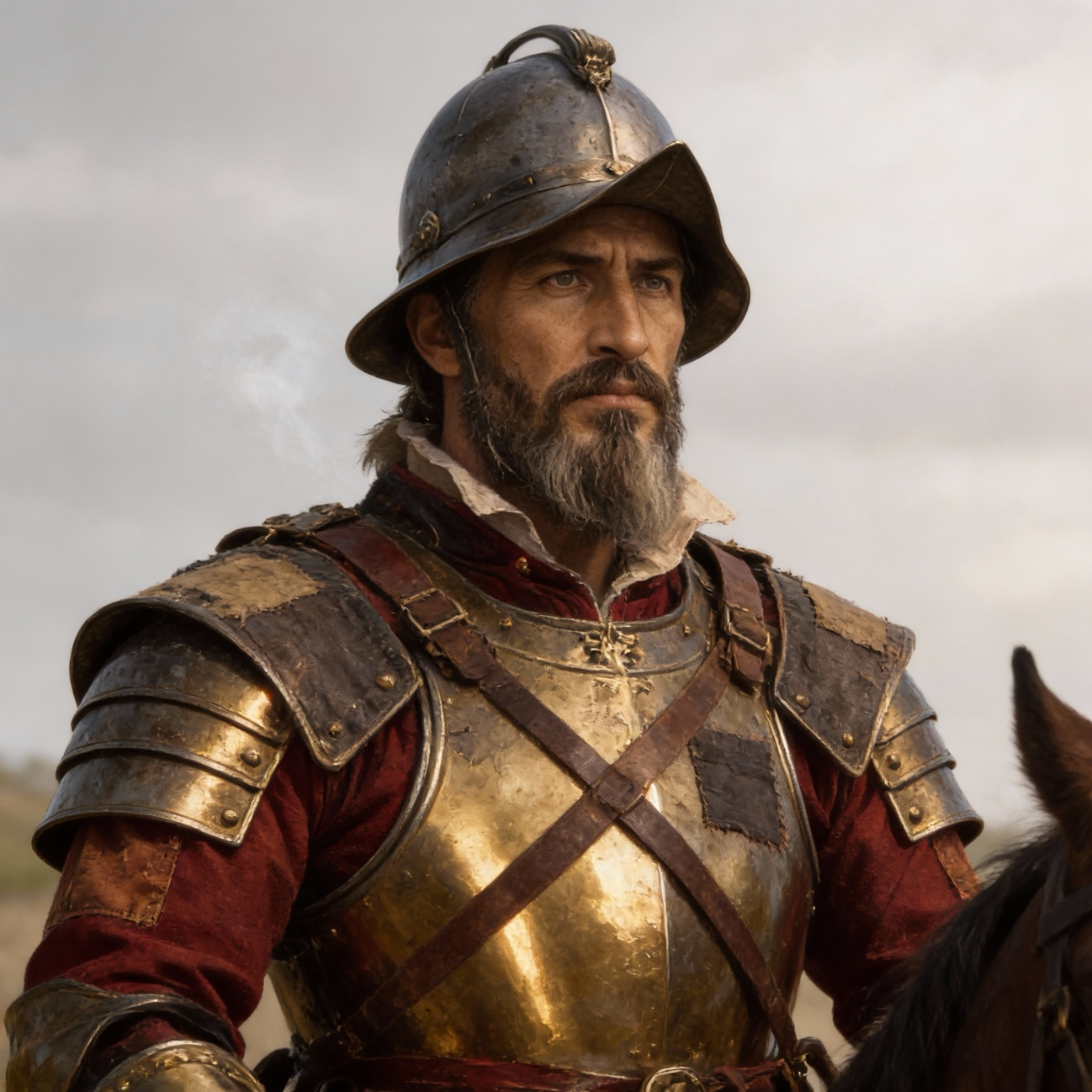
Trujillo, Extremadura – childhood and origins
Francisco Pizarro was born in Trujillo (Extremadura), probably in 1478, into a deeply hierarchical society in which lineage, legitimacy and land ownership decided people's fate from birth. He was the illegitimate son of Gonzalo Pizarro Rodríguez de Aguilar, a hidalgo of modest fortune but proud of his status, and of Francisca González, a humble woman with no protection or surname to offer her son.
Trujillo, an Extremaduran town with a livestock-based, militarised economy, was one of the main breeding grounds of the American conquest. Francisco de Orellana, Diego García de Paredes and several members of the Pizarro family itself came from there.
Francisco's childhood was marked by marginality. He was not formally acknowledged by his father in his early years and grew up on the edges of the family home, depending on distant relatives and occasional charity. He never attended any school. He remained illiterate all his life, which was no obstacle to his career but did shape his reserved and distrustful character.
Early chronicles describe him as a swineherd, looking after animals in the fields around Trujillo. Beyond the literal trade, this experience stands for a hard childhood of constant physical labour, exposure to extreme weather and early contact with the everyday violence of rural life.
Those years produced a man of few words, able to endure suffering, unsentimental and extremely persevering. Pizarro learned early that respect was not granted: it was imposed. That conviction would stay with him all his life.
The leap across the Atlantic
By the early sixteenth century, Seville had become the great gateway to the New World. Francisco Pizarro arrived there with no fortune, no education and no expectation beyond leaving behind a life with no future in Extremadura.
He is believed to have sailed to the Americas around 1502, probably as part of Nicolás de Ovando's large expedition to Hispaniola.
That voyage marked the beginning of the systematic colonisation of the Caribbean and brought an extremely harsh regime for the indigenous peoples.
For more than a decade Pizarro stayed in the background. He served as a common soldier, took part in minor campaigns and adapted to a world of tropical disease, constant violence and high mortality. He did not stand out for leadership or daring, but he did for endurance and reliability.
In 1513 he went with Vasco Núñez de Balboa on the expedition that crossed the Isthmus of Panama and ended with the discovery of the South Sea. Pizarro witnessed at first hand that symbolic moment, which permanently widened the geographical horizon of the Hispanic Monarchy.
After Balboa's fall, Pizarro managed to stay out of the political struggles, strengthening his image as a prudent and adaptable man.
Panama: hunger, failure and obsession
In Panama, well into the 1520s, Pizarro met Diego de Almagro and the cleric Hernando de Luque. The three formed an unequal partnership, held together more by ambition than by personal affinity.
Between 1524 and 1528 they organised several expeditions to the south along the Pacific, all of them marked by failure. The jungles were impenetrable, the coast inhospitable and the local peoples hostile.
The expeditions suffered extreme loss of life. Hunger at times forced the men to eat boiled leather and pack animals.
The episode on the Isla del Gallo (1527) became the founding moment of the Pizarro legend. Abandoned by the authorities in Panama, Pizarro drew a line in the sand and offered his men a plain choice: go back poor or carry on into the unknown.
Only thirteen followed him. That decision sealed a personal loyalty that would prove crucial at Cajamarca.
In 1529 Pizarro travelled to Spain. After hard negotiations he signed the Capitulation of Toledo with Charles I, which named him Governor and Captain General of New Castile.
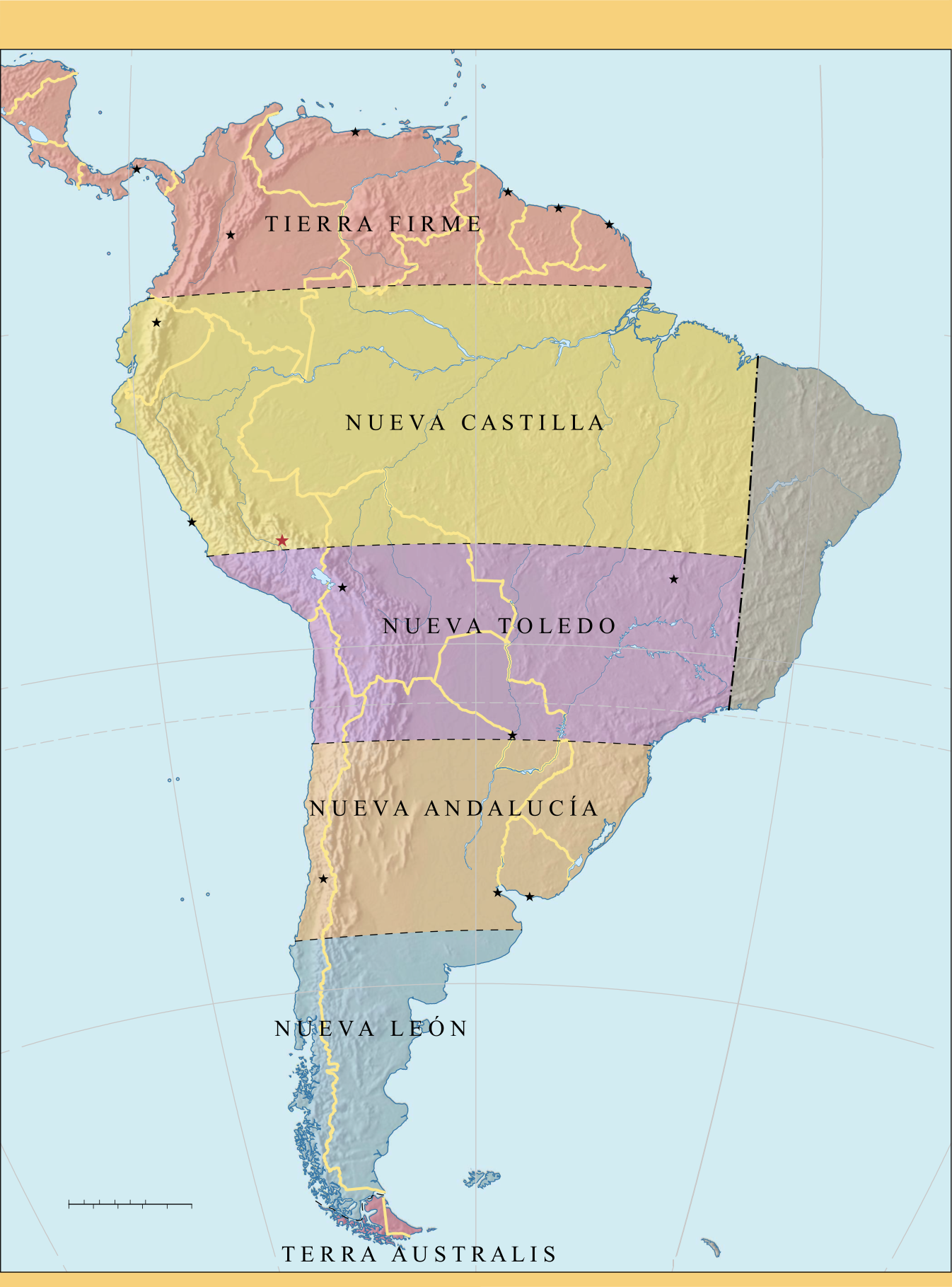
The capitulation gave Pizarro wide powers but left Almagro in a secondary position, sowing the seed of the conflict to come.
Cajamarca: the decisive moment
On 16 November 1532, Francisco Pizarro entered Cajamarca with about 168 men, facing an empire that stretched from what is now southern Colombia to Chile.
The Inca Empire had just emerged from a bloody civil war between Atahualpa and Huáscar, a circumstance that was decisive for the Spanish success.
The meeting with Atahualpa was a clash of worlds. The Inca, sure of his power, agreed to the meeting without foreseeing the attack. The Spanish ambush was swift, violent and psychologically devastating.
Pizarro personally shielded Atahualpa during the assault, aware that capturing him meant controlling the empire.
The promised ransom — one room filled with gold and two with silver — was gathered in 1533, one of the largest transfers of precious metals in history.
Atahualpa was executed on 26 July 1533.
The execution, preceded by baptism, followed a summary trial under the Castilian law of the time.
Governing the unconquerable
After the entry into Cuzco (1533), Pizarro faced the hardest task of his life: governing a vast, culturally complex and deeply wounded territory.
In 1535 he founded the City of the Kings (Lima), conceived as an administrative capital and strategic port.
Lima later became the capital of the Viceroyalty of Peru, the centre of Spanish power in South America.
The rivalry with Diego de Almagro led to a civil war among the conquistadors. After the battle of Las Salinas (1538), Almagro was executed.
From then on Pizarro governed surrounded by enemies, increasingly isolated and distrustful.
Death and legacy
On 26 June 1541 a group of Almagro's supporters burst into Francisco Pizarro's palace in Lima. The governor, by then an old man, defended himself sword in hand.
He was murdered at the age of 63–65, depending on the sources.
His remains now rest in Lima Cathedral, identified in the twentieth century.
Francisco Pizarro is commemorated today with statues and monuments in:
- Trujillo (Spain) – Plaza Mayor, equestrian statue.
- Lima (Peru) – A monument moved several times because of public controversy.
His figure remains the subject of intense historiographical debate.
Key dates
| Year | Event |
|---|---|
| 1478 | Born in Trujillo |
| 1502 | Voyage to the Americas |
| 1513 | Discovery of the South Sea |
| 1529 | Capitulation of Toledo |
| 1532 | Cajamarca |
| 1535 | Founding of Lima |
| 1541 | Death in Lima |