
Spanish America, the Patria Grande. Peoples and Cultures
To speak of Spanish America as the Patria Grande—the Great Homeland—is to invoke an idea that goes beyond political borders and focuses on a deep historical, linguistic and cultural unity. This view holds that, despite its fragmentation into many republics, there is a common foundation forged by centuries of mestizaje and a shared heritage that unites the region from the Río Bravo to Tierra del Fuego.

Urban Planning, Science and the Transatlantic Exchange
The Hispanic imprint irreversibly transformed the landscape, the economy and the daily life of the Americas. The Spanish model of urban planning—designed around a main square where civil power, religion and commerce coexisted—ordered the territory and gave rise to today's great cities, many of them now World Heritage Sites.
This expansion came with technological and scientific milestones: the introduction of the printing press in the sixteenth century, the creation of global trade routes such as the Manila Galleon, and botanical expeditions that catalogued the continent's riches. In everyday life, the contribution took the form of a two-way agricultural and livestock revolution: Spain introduced the horse, wheat, the vine, citrus fruits and iron tools, which, combined with maize, cacao and the potato, laid the foundations of the economy and the rich larder that defines the region today.
A Common Language and the Roots of Thought
Spain's deepest and most enduring contribution to the Americas is, without doubt, the Spanish language. More than a means of communication, Spanish became the tool that united hundreds of peoples with diverse languages, allowing a shared continental consciousness to emerge.
Along with the language came an early intellectual flowering. Spain brought its medieval and Renaissance university model to the New World, founding the continent's first universities (such as Santo Domingo in 1538, and Lima and Mexico in 1551) decades before the first institutions were established in English-speaking America. Likewise, pioneering legal and ethical debates, such as those of the School of Salamanca and the Laws of the Indies, sowed the first seeds of international law and the defence of human rights on American soil.

Mestizaje and Spanish American Integration
Unlike other colonial models, integration with Spain was based on a profound biological, institutional and cultural fusion.
Social mestizaje
Legal since 1514, marriage between Spaniards and indigenous people brought together the customs of both worlds and gave rise to an entirely new American identity.
Institutional alliance
Through the Laws of the Indies, Spain incorporated the caciques and the indigenous nobility into the administration and local government of the Empire.
Cultural syncretism
The birth of the American Baroque reflected this union, as native craftsmen expressed their own worldview and symbols within the art and faith brought from Europe.

Viajes de Cristóbal Colón
-
 Christopher Columbus's Voyages
Columbus's First Voyage (1492)
-
 Christopher Columbus's Voyages
Christopher Columbus's Four Voyages (1492–1504)
-
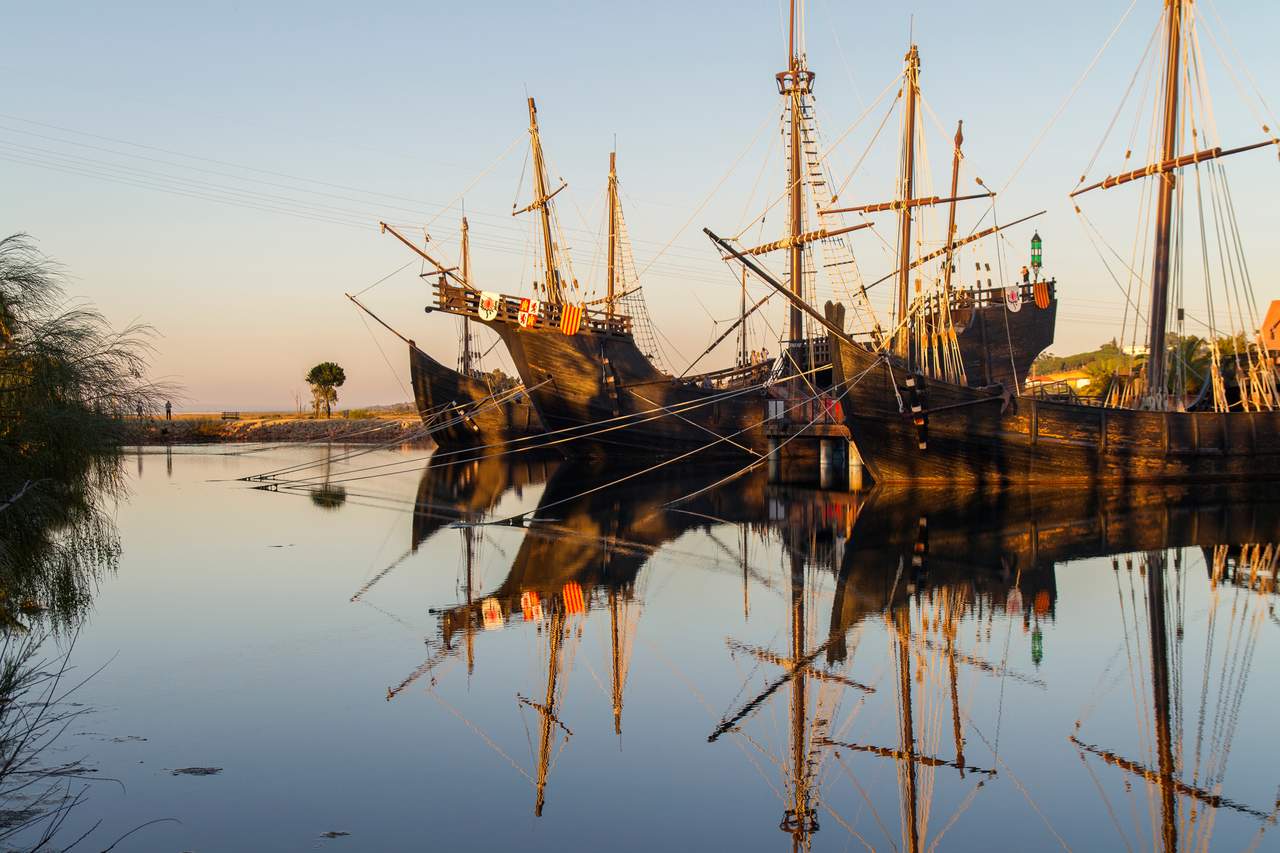 Christopher Columbus's Voyages
Logbook of the First Voyage
-
 Christopher Columbus's Voyages
The Discovery (1492)
-
 Christopher Columbus's Voyages
Columbus's Second Voyage (1493-1496)
-
 Christopher Columbus's Voyages
Columbus's Third Voyage (1498-1500)
-
 Christopher Columbus's Voyages
Columbus's Fourth Voyage (1502-1504)
A Shared Destiny
By recognising ourselves in the Patria Grande, we understand that each nation's diversity is not a barrier but a nuance that enriches a common trunk, in which the Spanish language acts as the great connecting vessel through which ideas and collective dreams flow. Ultimately, this unity is not only a legacy of the past but a will towards a shared destiny, a project of integration that seeks to project our own voice in the world with the strength of those who know they belong to a community of nations with one inseparable soul.
