
Columbus's Second Voyage (1493-1496)

The second voyage – The navigator's return
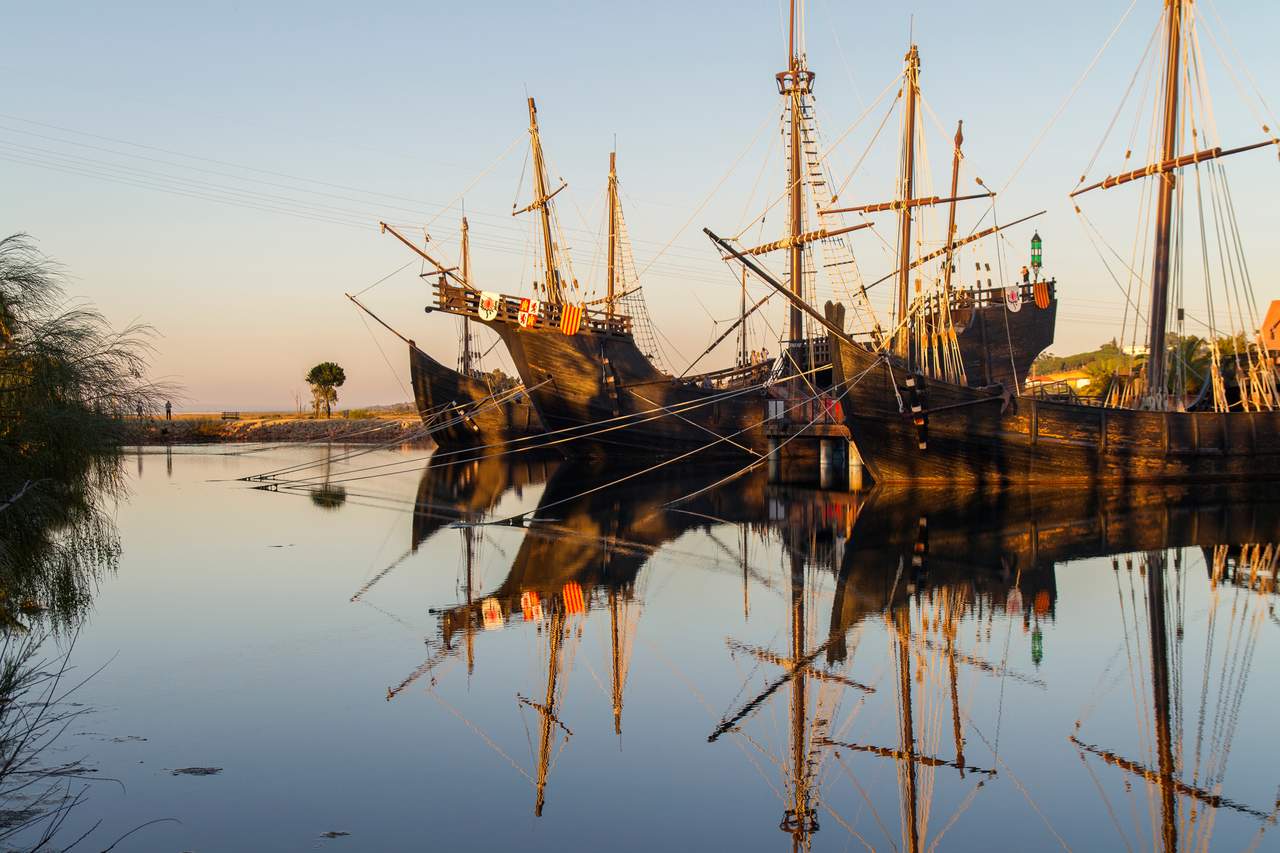
The ocean breeze was heavy and laden with salt on 25 September 1493, when a fleet of seventeen ships—5 naos and 12 caravels—with a crew of 1,800 men led by Christopher Columbus set sail from Cádiz. The sails flew like banners in the wind, driving not only the ships but also the dreams and ambitions of the Spanish Crown. Behind them lay the fervour of the preparations, directed with precision by Bishop Juan Rodríguez de Fonseca, a capable and shrewd man to whom the Catholic Monarchs had entrusted the organisation of this monumental enterprise.
The second voyage was not like the first. It was no longer just about exploring unknown seas, but about conquering and settling. In the holds of the ships, alongside the provisions, were pigs, hens, seeds and plants that, it was hoped, would take root in the New World. Clergy also travelled, with the mission of bringing the Christian faith to the natives. But the men of the expedition, many of them settlers with no seafaring experience, shared less enthusiasm for religion than for the riches Columbus had promised to find.

On reaching the Lesser Antilles, the lush landscape and crystal-clear waters filled the sailors with admiration, but the euphoria did not last long. When they reached Fort La Navidad on 27 November, they found it burned to the ground and its defenders killed. The air was heavy with a deathly silence that chilled the men's spirits. Columbus, whose reputation as a discoverer had dazzled the Court, felt the weight of uncertainty fall on his shoulders. That disaster raised doubts about his ability to govern the new lands.
Nevertheless, the navigator was not intimidated. Very close to the destroyed fort, on 6 January 1494, he founded the first colonial town, which he named La Isabela. From there he continued exploring, discovering Cuba and Jamaica and drawing nautical charts that would confirm the existence of the promised lands. But not everything was discovery; problems multiplied like storms on the high seas.
Adapting to that new world was hard for the settlers. Mediterranean crops such as vines and cereals failed in American soils, and the Castilians, used to their own diet, suffered when eating indigenous foods. Added to this were the exhausting labours of building settlements and discontent with Columbus's strict measures, as he refused to allow his men to enrich themselves personally. The tension was palpable, and mutiny was an ever-present threat.
In February 1494, Columbus sent a relief expedition to Spain with twelve ships, begging the Monarchs for reinforcements. But his prestige suffered a new blow when, as the relief ships returned in June of that year, rumours and complaints from the discontented also arrived. Some of his own men accused him of incompetence before the Court, while on Hispaniola tensions with the natives erupted into a rebellion that was brutally suppressed.
The decline of the indigenous population began under the heavy burden of the tributes imposed: cotton and gold, in quantities impossible to extract without exhausting effort. Some natives were sent to Spain as slaves, but the Catholic Monarchs, wary of the moral question, banned their sale until its legitimacy had been clarified.
The criticism did not stop. In response, the Crown sent the royal commissioner Juan de Aguado to inspect Columbus's actions. Clashes between the two were inevitable. In March 1496, weary of so many disputes, Columbus decided to return to Castile, reaching Cádiz in June. Before the Catholic Monarchs, at an audience in Burgos, Columbus sought to impress. He appeared surrounded by natives dressed in colourful feathers, carrying exotic birds and wearing a Franciscan habit, like a man devoted to his mission.
Despite the spectacle, his detractors kept up their efforts. Fonseca and other courtiers denounced the meagre economic return of the expeditions and questioned the abundance of gold in the new lands. But Columbus, with his characteristic tenacity, defended his cause, highlighting the work of evangelisation and the riches still to be discovered.
Columbus became trapped in a web of intrigue and political disputes. His second voyage, which was meant to consolidate his prestige and the interests of the Crown, turned into a constant struggle against enemies both visible and invisible. The navigator who had dreamed of glory and riches now faced the weight of a new world, both in distant lands and in the corridors of the palaces of Castile.
Share
Anexos relacionados
Relacionados
-
 Christopher Columbus's Voyages
The Discovery (1492)
-
 Christopher Columbus's Voyages
Columbus's First Voyage (1492)
-
 Christopher Columbus's Voyages
Logbook of the First Voyage
-
 Christopher Columbus's Voyages
Columbus's Third Voyage (1498-1500)
-
 Christopher Columbus's Voyages
Columbus's Fourth Voyage (1502-1504)