
The Arrival of the Twelve: A Dawn for Spanish America

Veracruz, 1524: the day the barefoot men arrived
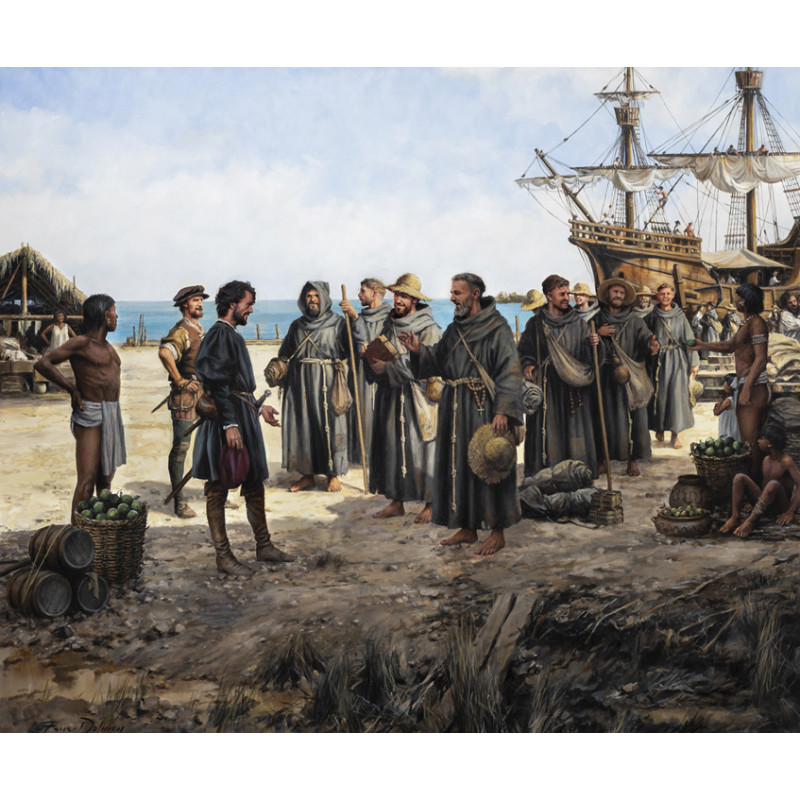
The waters of the Gulf shone with an unfamiliar light as a ship approached the sands of Veracruz. On deck, twelve Franciscan friars gazed at the coast with a mixture of fear and hope, aware that they were about to set foot in an unknown world. Friar Martín de Valencia, the eldest of them, was the first to step forward and touch the sand, barefoot like all the others. That was how they had chosen to cross the ocean: as Christ's poor, with no weapons but their habits and their faith.
Motolinía, one of the friars, quietly asked Martín de Valencia what awaited them. The old friar, looking at the shore crowded with curious natives and restless soldiers, replied that a new people awaited them and perhaps a new world. Behind him, the other eleven raised their crucifixes. It was 13 May 1524, an apparently ordinary day, but one destined to change the history of an entire continent.
Then the unexpected happened: Hernán Cortés, conqueror of the Mexica empire, came towards them surrounded by his captains. Without a word, without giving orders or explanations, he knelt and kissed the friars' dusty habits. The indigenous chiefs, silent witnesses to the scene, were astonished. Thus began the evangelisation of New Spain.
Roads of dust and silence: towards the Valley of Mexico
The journey to the Valley of Mexico was a slow, laborious pilgrimage. The friars slept in huts, under trees or in makeshift hospitals, accepting tortillas, beans or fruit, always repeating the phrase: "We have not come to rule. We have come to serve."
Along the way they received encouraging news: in Tlaxcala there was already a small hospital founded by Friar Bartolomé de Olmedo; in Texcoco there were natives willing to listen; and in Mexico City, the old Tenochtitlan rebuilt on the water, new stone churches were rising over the destroyed temples. The world was being born again.
The great conversation of Texcoco
One afternoon the friars sat in a circle facing the elders of Texcoco, listening to stories about Quetzalcóatl, the calendars and the migrations from Aztlán. The natives wanted to know what the men from across the sea had brought. Martín de Jesús replied that they brought words and a teaching: that all men are brothers.
After conferring among themselves, one of the elders proposed an agreement: "If you are brothers… teach us and learn from us." That silent pact mattered more than many royal decrees, for evangelisation would begin with dialogue, not imposition. And that dialogue would bear astonishing fruit.
The first convents: foundations of a new world
The Twelve spread out through the towns of the highlands, building fortified convents that would become spiritual, cultural and administrative centres. For decades these buildings shaped the landscape of New Spain. Among the first works were the Convent of San Francisco in Texcoco (1526), the Convent of San Francisco in Tlaxcala (1527), and the convents of Huejotzingo, Cuernavaca, Tepeaca, Tlalmanalco and Michoacán.
Each convent was a microcosm: schools of singing and music where the first indigenous choirs were formed; painting workshops that gave rise to the "tequitqui" style, a blend of indigenous and European art; medicinal gardens where natives taught the friars the uses of pre-Hispanic plants; and courts of mediation where the friars defended the natives against abuse. They were not just buildings, but hubs of a new mestizo culture.
Tlatelolco: where the first indigenous intellectual elite was born
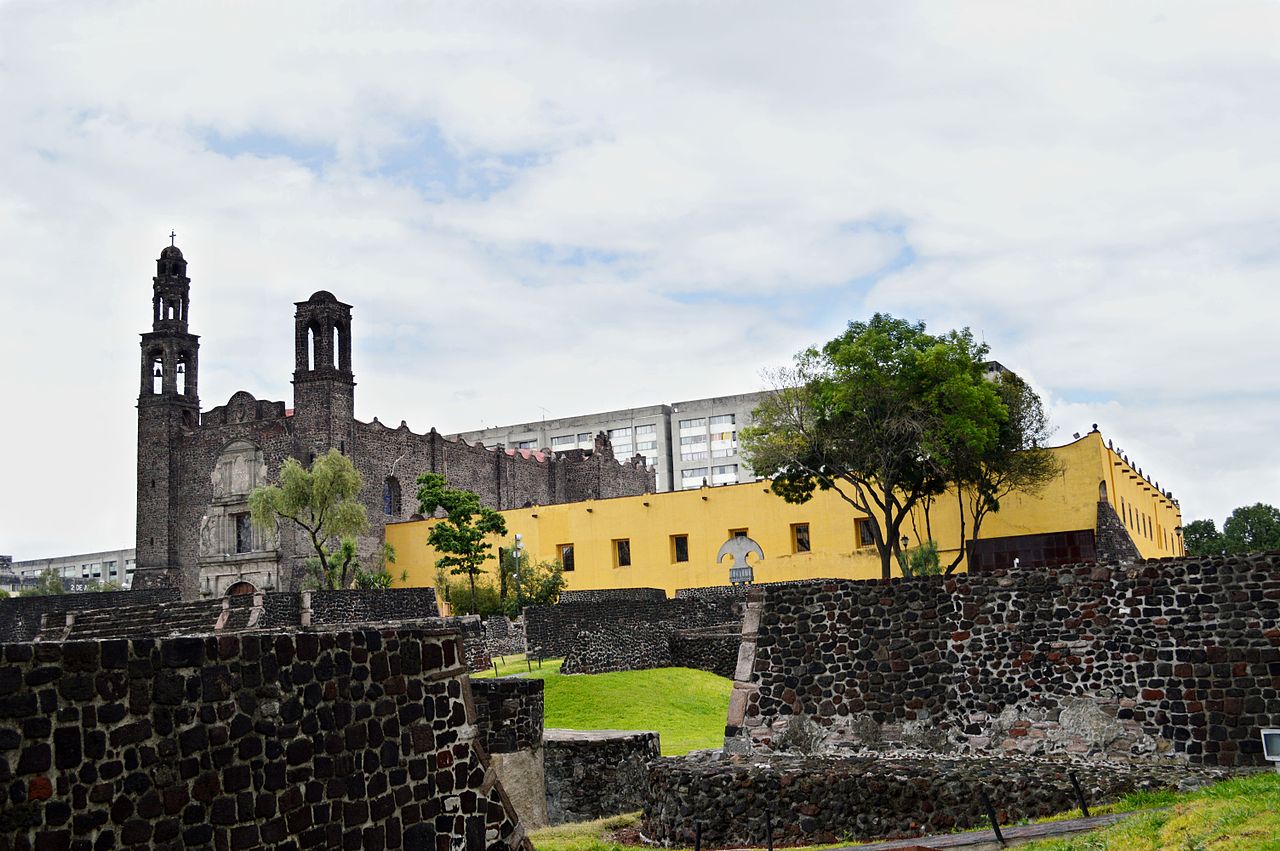
The College of Santa Cruz de Tlatelolco, founded by the Franciscans in 1536, was the seed of the new Spanish America. There young indigenous men learned Latin better than many Spanish students, studied rhetoric, philosophy and Gregorian chant, and recorded their own past in codices written in the Latin alphabet. They learned to be bridges between two cultures.
One day Antonio Valeriano, later an indigenous scholar, asked Motolinía whether they were being trained to be like the friars. The friar replied: "No, my son. We are teaching you so that you may be better than us." The answer spread quickly, and the natives began to believe it.
Languages saved by the pen
The friars understood that it was impossible to evangelise without understanding the indigenous languages. They therefore spent years studying Nahuatl, Otomí, Purépecha and Mixtec. Friar Luis de Fuensalida lived among the Mexica, taking notes day and night; Friar Francisco Jiménez wrote the first grammar of Nahuatl; Friar Andrés de Olmos rewrote it in 1547, producing the first grammar of an American language recorded by Europeans.
Thanks to these works, indigenous languages that might have died out were preserved, together with the world they expressed.
Defending the people: confronting injustice
The Franciscan mission also had its shadows. The Twelve saw some Spaniards demand excessive tribute, punish cruelly and exploit natives in the encomiendas. In Tlaxcala, Martín de Valencia confronted an encomendero, proclaiming that "the Indians are children of God" and demanding respect.
The friars wrote to Charles V, argued with Cortés and protested in public sermons. Often the Church became the only refuge for the native peoples.
The legacy: the quiet birth of Spanish America
As the years passed, some of the Twelve died on mission, others disappeared in remote regions and some went on building schools, hospitals, hospices and convents. Their legacy includes more than 80 Franciscan convents before 1600, dozens of colleges for indigenous students, libraries where works in indigenous languages were copied, historical chronicles and peaceful indigenous settlements (reducciones), forerunners of the Jesuit model. In addition, mestizo art became the visual hallmark of Mexico and Spanish America.
New Spain and much of the continent did not simply become an extension of Europe, but something new, born of encounter, conflict and hope.
Motolinía's last look
It is said that, as an old man, Motolinía was walking one afternoon through the corridors of the College of Tlatelolco, listening to young indigenous students sing a psalm in Latin, but with a different rhythm, warm and almost pre-Hispanic. Motolinía smiled and whispered: "This is how it was meant to be."
In the end, the Twelve did not come to destroy but to kindle a new fire, a fire that was neither only European nor only indigenous, but the fire of Spanish America, a land where worlds meet, mingle and are reborn. That fire still burns.
The Twelve Apostles of Mexico: detailed biographies
Friar Martín de Valencia (1474–1534): Superior of the mission
A native of Valencia de Don Juan, in León, Friar Martín de Valencia was the undisputed leader of the Twelve Apostles of Mexico and a central figure in the first missionary effort in New Spain. He was noted for his extreme asceticism and his exemplary life as a model of Franciscan poverty. For all this, many regard him as "the father of the evangelisation of Mexico".
Friar Francisco de Soto: Provincial of the Holy Gospel
The oldest of the Twelve, Friar Francisco de Soto founded the Franciscan province of the Holy Gospel, the first major church structure in New Spain. He was an active defender of the natives and denounced the abuses committed by the settlers. He died in Mexico City in 1551.
Friar Martín de Jesús, or de la Coruña (1480–1558): The Apostle of Michoacán
Active mainly in Michoacán, he is credited with the "Account of the ceremonies, rites, population and government of the Indians of Michoacán", which earned him recognition as one of the first ethnographers. He died in Pátzcuaro.
Friar Juan Suárez: Guardian of Huejotzingo
Founder of the convent of Huejotzingo, one of the most important of the sixteenth century. He died in Florida in 1528, becoming an example of missionary sacrifice.
Friar Antonio de Ciudad Rodrigo: Frontier missionary
He worked in the regions of Yucatán, Sinaloa and New Mexico, and defended the natives by denouncing injustices before Charles V. Out of humility, he turned down appointment as a bishop.
Friar Toribio de Benavente, "Motolinía" (1482–1569): The essential chronicler
The Nahuatl name "Motolinía" means "poor one". He was a great linguist and evangeliser, author of the celebrated "History of the Indians of New Spain" and a defender of the native peoples.
Friar García de Cisneros: Educator and humanist
Founder of the College of Santa Cruz de Tlatelolco in 1536, the first institution of higher education for indigenous students. His work was key to forming the first indigenous cultural elite.
Friar Luis de Fuensalida: Master of Nahuatl
Recognised as one of the first great linguists of Nahuatl. He studied Mexica codices and traditions, making the first doctrinal translations possible.
Friar Juan de Palos: Preacher to the natives
A lay brother who learned Nahuatl in order to preach directly. He took part in, and died on, Narváez's expedition to Florida in 1527.
Friar Andrés de Córdoba: Martyr of the faith
A lay brother and preacher in Nahuatl. He died a martyr defending his indigenous faithful during a local revolt.
Friar Juan de Rivas: Builder of convents
A great organiser who established convents and doctrine schools in Tepeaca and Cuernavaca. He stood out for his command of Nahuatl and his practical spirit.
Friar Francisco Jiménez (or Jiménez Cantó): Pioneer of Nahuatl grammar
Probable author of the first Nahuatl grammar, in 1528. His work directly influenced Andrés de Olmos's grammar of 1547, establishing the importance of the Nahuatl language.