
The Conquest of Guatemala and El Salvador (1524–1530): A Complex and Transformative Process
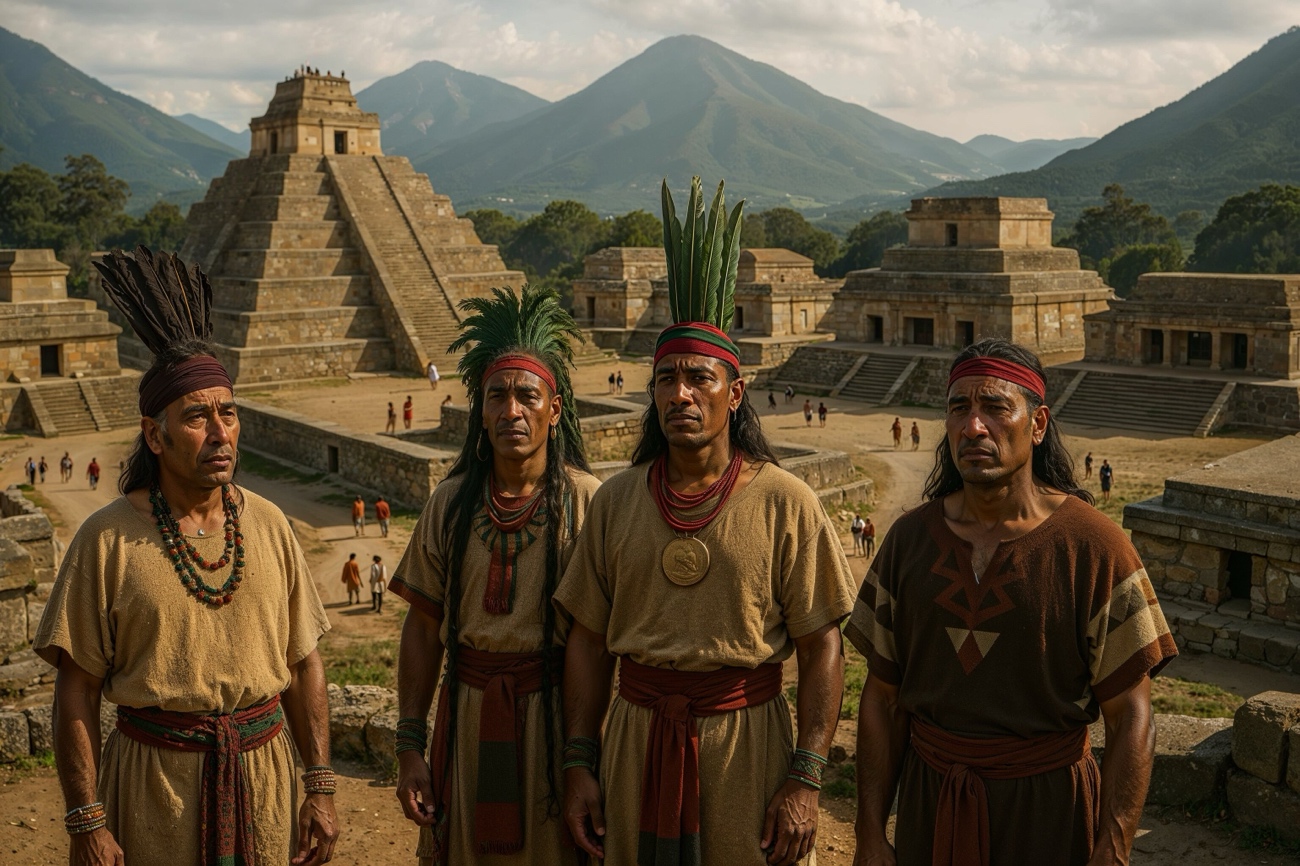
A world under strain: the mosaic before the storm
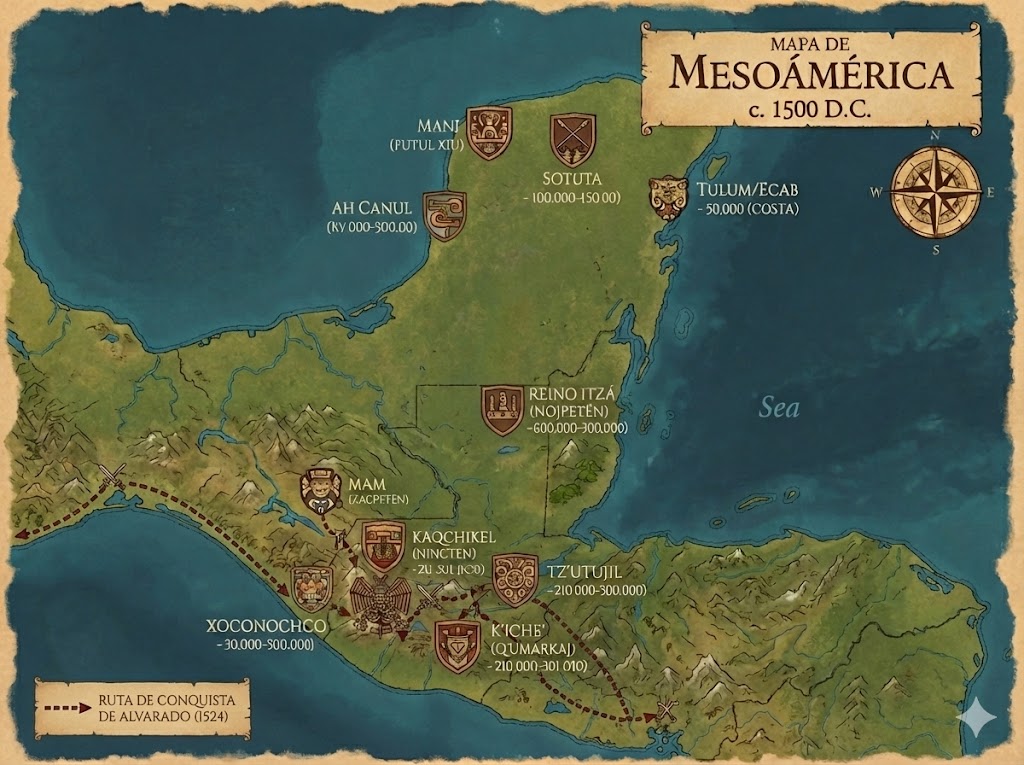
At the dawn of 1524, the territory we now know as Guatemala was a place of extraordinary vitality and complexity, and of deep divisions. Far from being a political unit, the area was made up of a multitude of Maya kingdoms, some large and powerful, others small and unobtrusive, bound together by fragile alliances, old rivalries and wars that, in many cases, were fought as rituals.
In this context, the enmity between the K'iche' and the Kaqchikel was the main fault line of the highlands, a historic division that, without its protagonists knowing it, would become the opening through which the Spanish conquest would seep in.
The conquest of Central America
The fall of Tenochtitlan in 1521 echoed as far as the Maya mountains. Hernán Cortés, driven by an urge to expand that went beyond the mere conquest of the Mexica capital, sent Pedro de Alvarado, one of his most ambitious captains, to claim those lands said to abound in wealth, maize, jade and gold.
Two worlds that could not understand each other
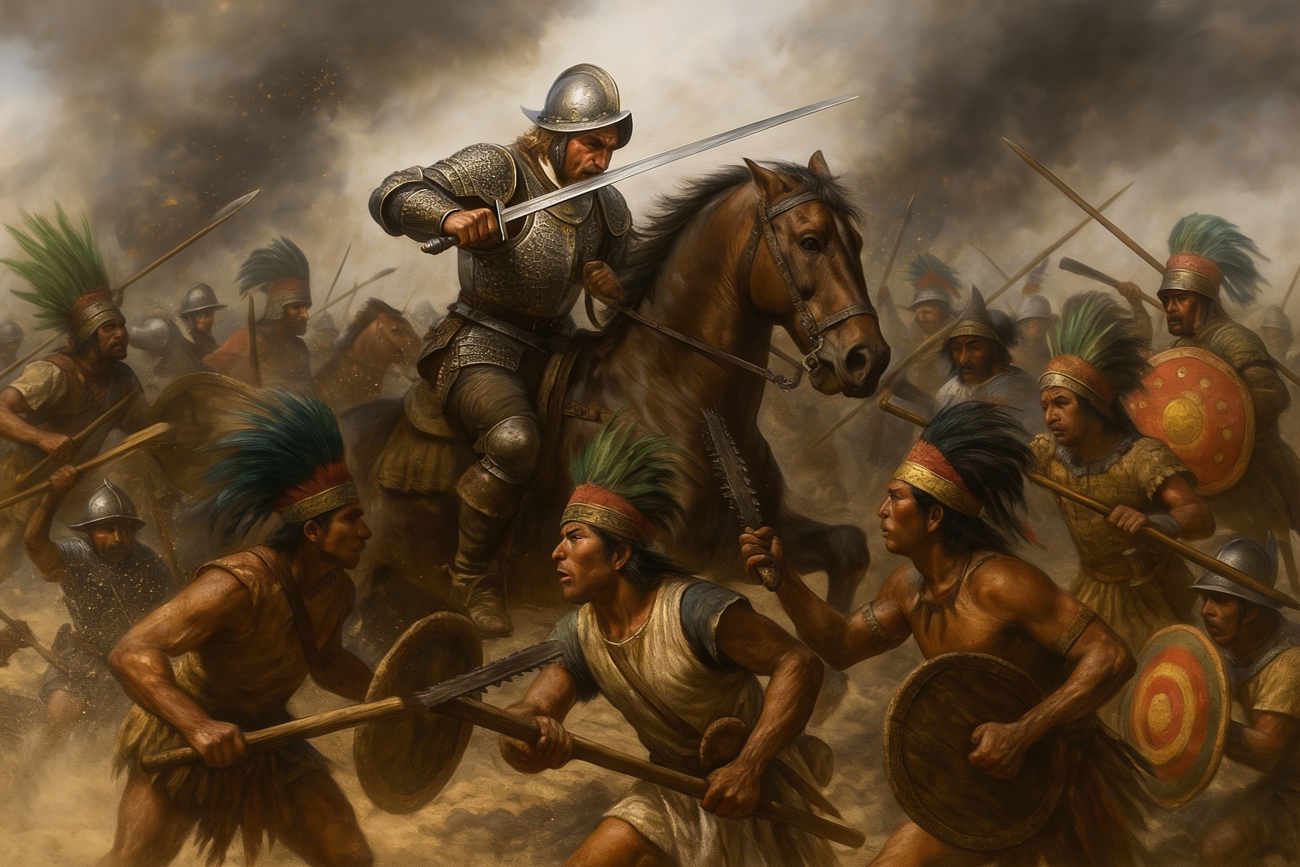
The confrontation in Guatemala was, above all, a clash of radically different ideas of warfare. The Maya warriors knew the terrain: they fought by ambush and used traps with hidden stakes to halt the advance of the cavalry.
The Spaniards brought unknown technology: steel, arquebuses, cannon, crossbows, warhorses and attack dogs. Their aim was not to take prisoners for sacrifice but to crush resistance in order to secure control of the territory.
Despite their technological power, the Spaniards' real strength lay in their native allies. For every European soldier marched dozens of Tlaxcalan, Cholultec and Mexica warriors. The conquest was thus, in essence, a Mesoamerican war redirected by a small group of foreigners.
Alvarado's advance and the collapse of the K'iche' kingdom (1524)
Pedro de Alvarado began his incursion in Soconusco at the end of 1523. The first significant clash took place at the Samalá River, opening a series of rapid battles.
Zapotitlán – 8 February 1524
After crossing the Samalá despite resistance from the archers, the Spanish cavalry and indigenous allies stormed the town of Zapotitlán. Although Alvarado was wounded, the advance continued.
The Sierra Madre and Quetzaltenango – from 12 February
On the climb towards Quetzaltenango, the K'iche' laid ambushes. But the unexpected appearance of the cavalry broke their lines. In these battles Tecún Umán died, a legendary figure whose fall was a spiritual blow to the K'iche' army.
Q'umarkaj, a sacred and fortified city, received Alvarado with an appearance of peace. The conquistador, suspecting a trap, had the K'iche' lords burned at the stake and set fire to the city, filling the political vacuum through fragile alliances.
Iximché: useful alliances, inevitable rebellions
The Kaqchikel, enemies of the K'iche', saw Alvarado as an ally. In April 1524 they received him at Iximché, but the collaboration lasted only a few months. Spanish greed broke the pact when Alvarado demanded excessive tribute in gold.
In response, the Kaqchikel took refuge in the mountains and began a guerrilla war that lasted almost six years, turning the highlands into a theatre of ambushes and fierce resistance.
Beyond the highlands: expansion into other lands
- Pacific lowlands (1524): Subjugation of the Nahua of Izcuintepeque and the Xinca of Atiquipaque.
- Zaculeu and the Mam resistance (1525): The fortress withstood a long siege led by Gonzalo de Alvarado until its supplies ran out.
- The Cuchumatanes (1529–1530): The Ixil and Uspantec peoples put up fierce resistance and were conquered after brutal campaigns.
Verapaz: conquest without the sword (1537)
Friar Bartolomé de las Casas proposed evangelising the "Land of War" without soldiers. Christian natives were sent who traded in the region while singing hymns. The method worked, and the area came to be called Verapaz ("True Peace").
The last kingdom: the fall of Nojpetén (1697)
The Itza kingdom of Petén remained independent for almost two centuries. It was not until 1697, in a planned amphibious attack, that the Spaniards took the island of Nojpetén, marking the end of the conquest in Mesoamerica.
The colonial order: subjugation, faith and syncretism
Mechanisms such as the encomienda and the repartimiento (forced labour) were imposed. The Church transformed the cultural landscape, but the Maya fused their beliefs with Christian symbols, giving rise to today's religious syncretism.
A legacy of fire and roots
The conquest brought epidemics and a new racial order, but Maya culture survived in language, weaving and ceremonies. Its legacy beats in every valley of the highlands, a reminder that, despite the war, its roots were not destroyed.