The Taíno People
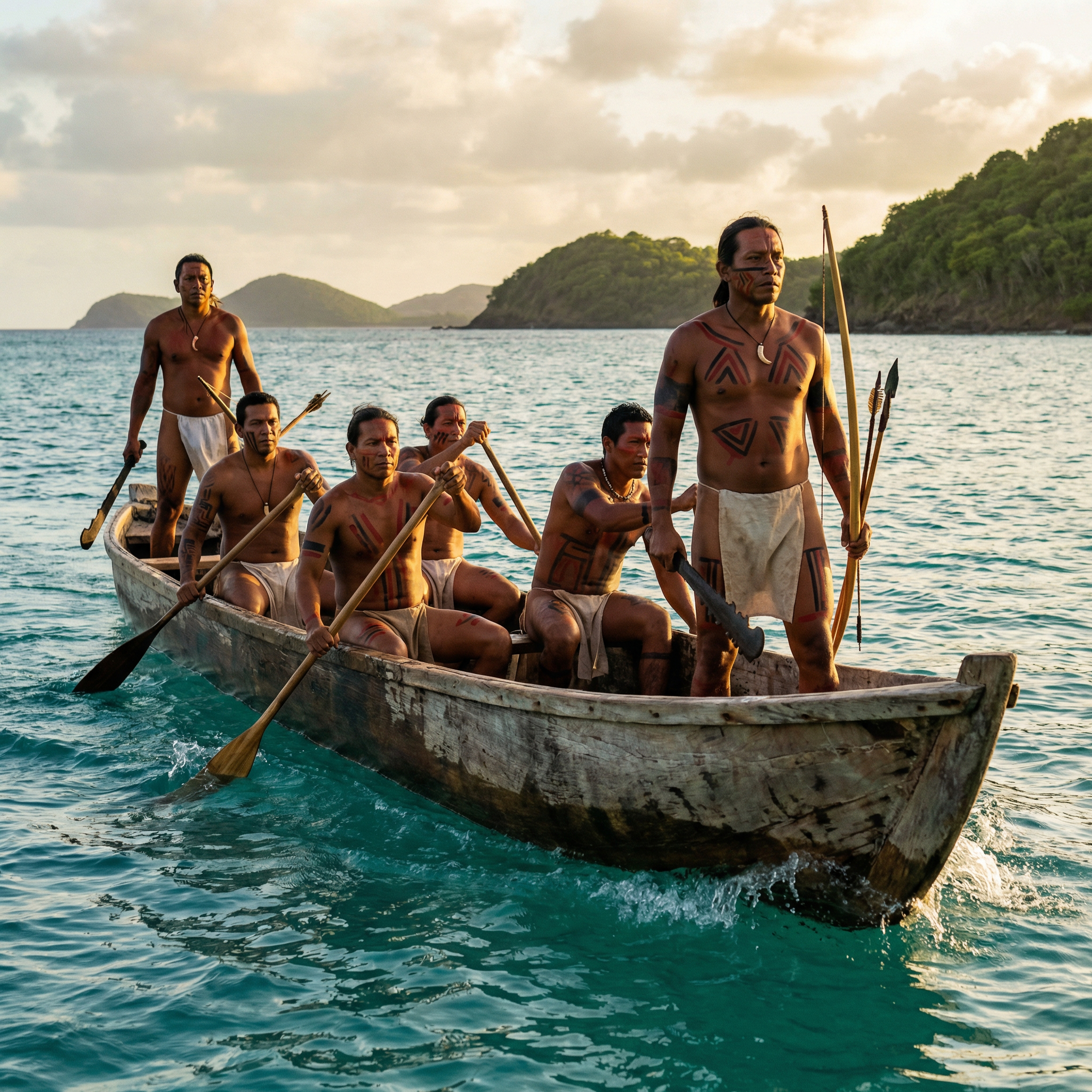
On the islands of the Caribbean, bathed in eternal sunshine and surrounded by crystal-clear waters, the Taíno left an indelible mark on the history and culture of the region. This civilisation, descended from the Arawak of the Orinoco River, migrated from South America more than 2,500 years ago to islands such as Cuba, Hispaniola, Puerto Rico, Jamaica and the Bahamas, bringing with them a rich and complex culture deeply connected to nature.
An organised way of life
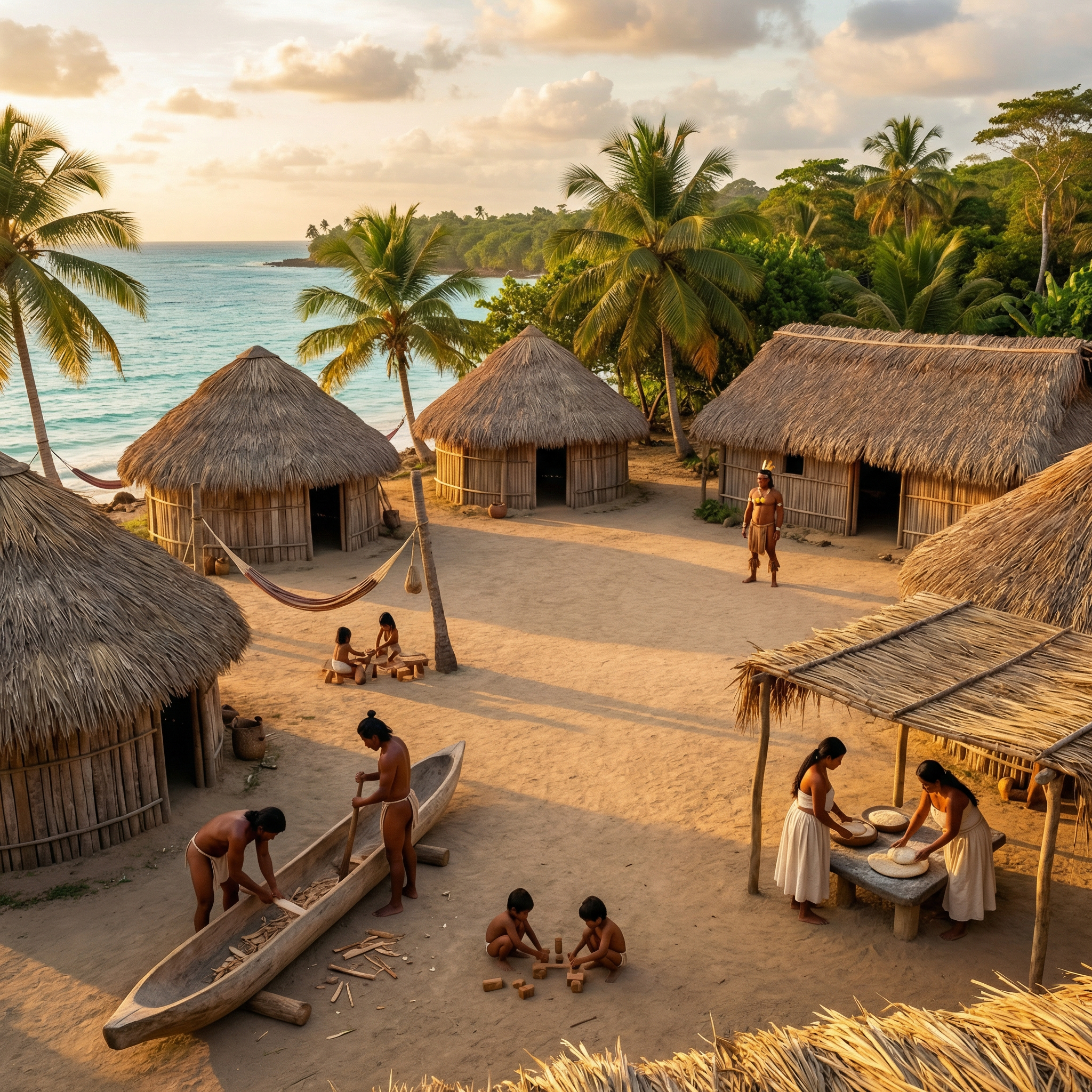
The Taíno lived in villages known as yucayeques, strategically located near rivers or coasts, sources of life and communication. In these communities people lived in bohíos, circular structures built of logs and palm leaves, where families rested in hammocks woven from cotton or maguey fibre. The community leader, the cacique, lived in the caney, a larger rectangular house that symbolised his authority and served as the centre for decision-making and important ceremonies.
Women did the farm work, raised the children, prepared food and made utensils, baskets and crafts. They also made naguas (skirts), which were worn only by married women. Children helped their mothers until they were ready to take part in activities such as hunting and fishing.
Taíno society valued tools and utensils made of wood, stone and other materials, while their ceremonies and decorations featured geometric shapes and animals from their surroundings. Society was organised hierarchically, with the caciques in command, assisted by the nitaínos, a class of warriors and advisers. The naborías, for their part, were the labour force who worked the fields, fished and hunted. In this system every member of the community had a defined role that contributed to the common good.

Polygamy as a strategy
Among the cacique's privileges was polygamy, which became common in times of conflict. Constant clashes with the Caribs, a warrior people who frequently attacked the Taíno, led to heavy losses among the men. To keep the population up and avoid the dishonour of having no children, the caciques adopted this practice, taking several wives and ensuring the community's continuity.
Tobacco: a spiritual and recreational pillar
Among the many crops the Taíno grew in conucos, small mounds of earth used for planting, tobacco held a special place. The plant was not only a material resource but also a spiritual and recreational one. Tobacco leaves were carefully grown, dried and rolled into rudimentary cigars that the Taíno smoked constantly, either for pleasure or to relieve fatigue on long walks.
Tobacco played a crucial role in the cohoba ceremonies, in which the caciques and behiques (shamans) inhaled hallucinogenic powders mixed with tobacco to enter a trance. During these ceremonies they sought to communicate with the zemíes, spiritual figures representing gods or ancestors, skilfully carved in stone, wood or ceramic. This trance state allowed them to have visions, resolve conflicts and make important decisions for the community.
Art in harmony with nature
The Taíno were also expert craftspeople. In their everyday and ceremonial objects, such as vessels, necklaces and tools, they reflected their connection with their environment. They decorated their creations with geometric patterns and figures of animals such as turtles, frogs and bats, symbols of their spirituality and their relationship with the natural world.
Women, besides taking part in gathering and farming, were responsible for pottery and for making baskets and textiles. They played a central role in passing knowledge on to new generations, ensuring the continuity of Taíno traditions.
The arrival of the Spaniards
In the fifteenth century, the arrival of the Europeans marked the beginning of an era of change and resistance. Christopher Columbus, at his first encounter with the Taíno, described them as a kind and hospitable people.
But the fate of this people was about to change irreversibly. The Taíno watched with curiosity as these fair-skinned visitors in heavy clothes came ashore with strange metal objects. At first they welcomed them hospitably, sharing their food and offering their zemíes as a symbol of peace. But the Europeans brought with them something that neither arrows nor words could fight: invisible death.
First came the diseases, fevers the Taíno had never known. Smallpox spread like wildfire, weakening their bodies and snuffing out their lives. Whole families vanished in a few days, leaving behind empty bohíos and a silence that chilled the soul.
Then came forced labour. The Taíno, used to working their land with love and care, were made to dig mines and carry heavy loads under the scorching sun. Their hands, made to sow life, now tore riches from the earth for others. Little by little, hunger and exhaustion wore down what was left of their resistance.
Amid this devastation, some rose up in arms, led by caciques such as Caonabo and Anacaona. But arrows and spears were no match for firearms or the conquerors' military tactics. The clashes ended in massacres, and villages were razed.
Within a few decades, the island that had once rung with the songs of the Taíno fell almost silent. By the middle of the sixteenth century the population had fallen from the original 136,000 inhabitants to a few thousand, and many of these were no more than slaves in their own land.