The Great Food Exchange between the Americas and Europe

The great exchange: the story of food travelling between the Americas and Europe
When the first Spaniards reached the Americas, an unprecedented encounter took place between two food worlds separated by thousands of years of evolution. It was not only a matter of unknown peoples and territories, but of culinary customs and products that changed human history far more deeply than any military conflict. In the kitchens of Castile and the markets of Tenochtitlan, in the Andean fields and the taverns of Seville, an exchange began that would shape the future of food around the world.
The foods that came from Europe
The first caravels to cross the Atlantic carried not only conquistadors but also seeds and animals the Europeans considered essential. These products were part of their identity, their customs and even their religious practices. Wheat, for example, was one of the most significant crops, because it represented more than food: without wheat there was no bread, and without bread the Eucharist could not be celebrated. Its sowing was therefore a priority in places such as Hispaniola, Cuba and Mexico.
Alongside wheat, other crops such as chickpeas, lentils and broad beans soon found their place in the gardens of convents and encomiendas. The most common vegetables, such as onions, garlic and carrots, completed the dishes of the first settlers.
The most radical change, however, came with the animals: horses, cattle, pigs, sheep and goats crossed the ocean and multiplied within a few years, transforming life and the environment in the Americas. The horse changed the way war was waged and the mobility of indigenous peoples, while cattle and sheep altered landscapes, routes and, later, colonial economies. The arrival of hens and eggs added new elements to a diet that was gradually blending with native ingredients.
And so the Mediterranean footprint took hold on the American continent: vines for wine, olive trees, citrus fruits, peaches, pears and figs became part of the landscape and of daily life. A European world had arrived to stay.
The foods the Americas sent to Europe
The exchange did not run in one direction. Seville, the empire's main port, began to receive products never seen before: golden maize, potatoes and sweet potatoes from the Andes, brightly coloured tomatoes and peppers, Mesoamerican quinoa and beans. Monasteries and royal gardens became laboratories where botanists and clergy studied and experimented with these novelties. Some plants, such as the tomato and the potato, took time to be accepted: the tomato was first grown as an ornamental plant, and the potato grew in botanical gardens before reaching peasants' tables. Over time, however, these products revolutionised European cooking, agriculture and population growth.
Two American products would have a special impact: cacao and vanilla. Originally in indigenous hands, they were transformed by European artisans, who created modern chocolate by mixing cacao with sugar. Chilli peppers not only conquered Europe but, thanks to the Portuguese, reached India, South-East Asia and China, where they are now essential to the local cuisines.
Exotic, sweet fruits such as pineapple, cherimoya and guava astonished the European courts. Tobacco, though not a food, changed habits and economies on a large scale.
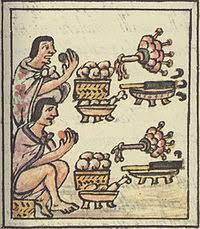
The transformation of cuisines and cultures
In less than a century, both worlds had exchanged not only products but also flavours, cooking techniques, needs and even culinary identities. The Mediterranean adopted the tomato; the Andes, wheat; Mexico, the pig; and Spain, maize. From this exchange emerged modern cuisine, mestizo and global, the reflection of a fusion that is still with us today.
| Origin | Category | Products |
|---|---|---|
| Europe to the Americas | Cereals | Wheat, Barley, Rye, Oats |
| Pulses | Chickpeas, Lentils, Broad beans, Peas | |
| Vegetables | Onion, Garlic, Cabbage, Carrot, Lettuce, Turnips, Radishes | |
| Fruits | Grapes, Figs, Citrus (orange, lemon), Apple, Pear, Peach | |
| Large livestock | Horses, Cows, Bulls, Mules, Donkeys | |
| Small livestock | Pigs, Sheep, Goats | |
| Poultry / Other products | Hens, Cockerels, Pigeons, Olive oil, Wine, Sugar cane, European honey | |
| The Americas to Europe | Tubers | Potato, Sweet potato |
| Cereals and pseudocereals | Maize, Quinoa | |
| Vegetables | Tomato, Peppers/Chillies, American squash | |
| American legumes | Beans, Peanut | |
| Fruits | Pineapple, Avocado, Papaya, Guava, Cherimoya | |
| Seasonings and spices | Vanilla, Chilli | |
| Luxury products / Other | Cacao (chocolate), Tobacco, Sunflower seeds, Cashew |