Amerigo Vespucci, Alonso de Ojeda and Juan de la Cosa Explore the Coast of Venezuela and Brazil
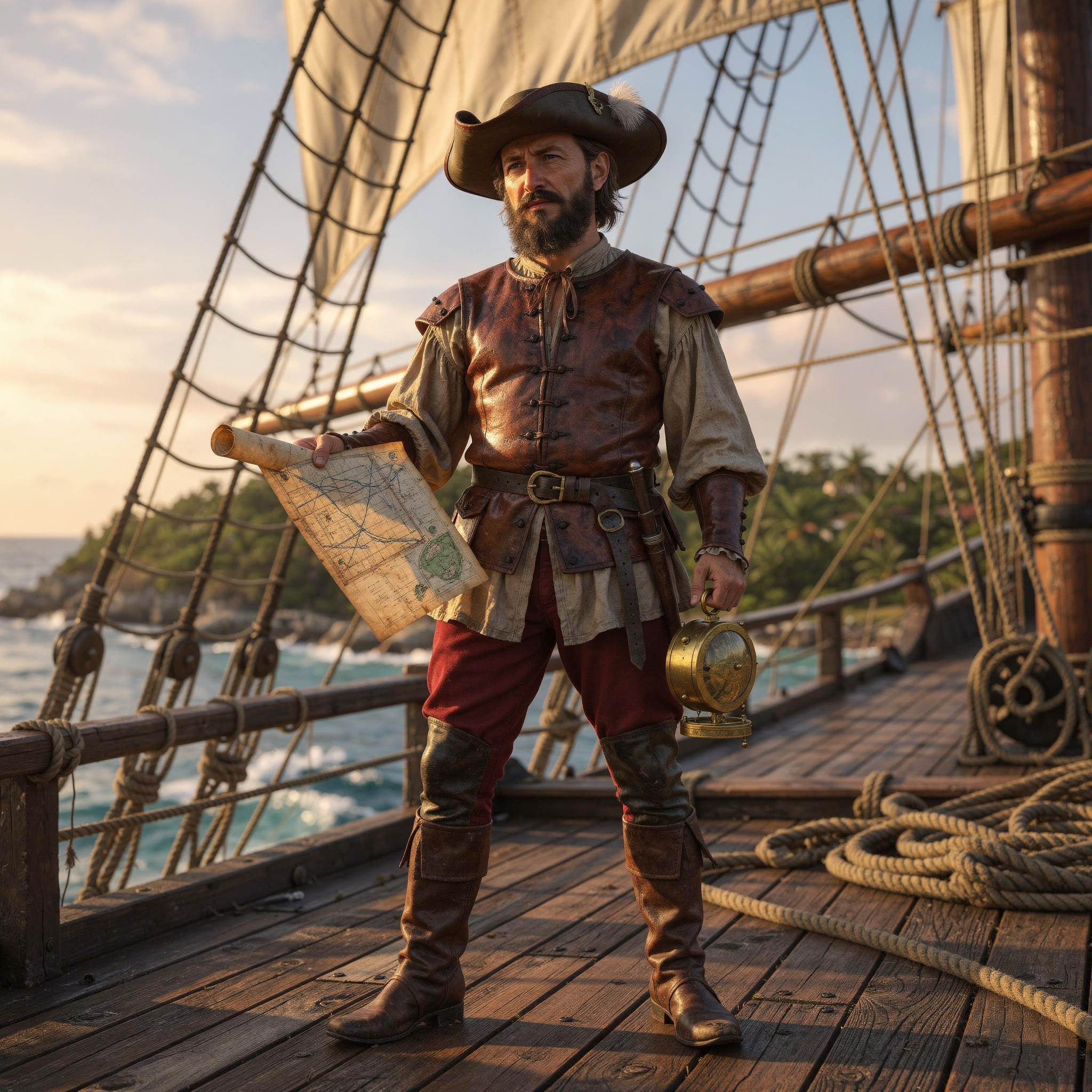
The sails fluttered like wings ready to take flight, while the caravels creaked impatiently at the quay. A murmur rose among the sailors, a mixture of nerves and promise: they were heading into the unknown.
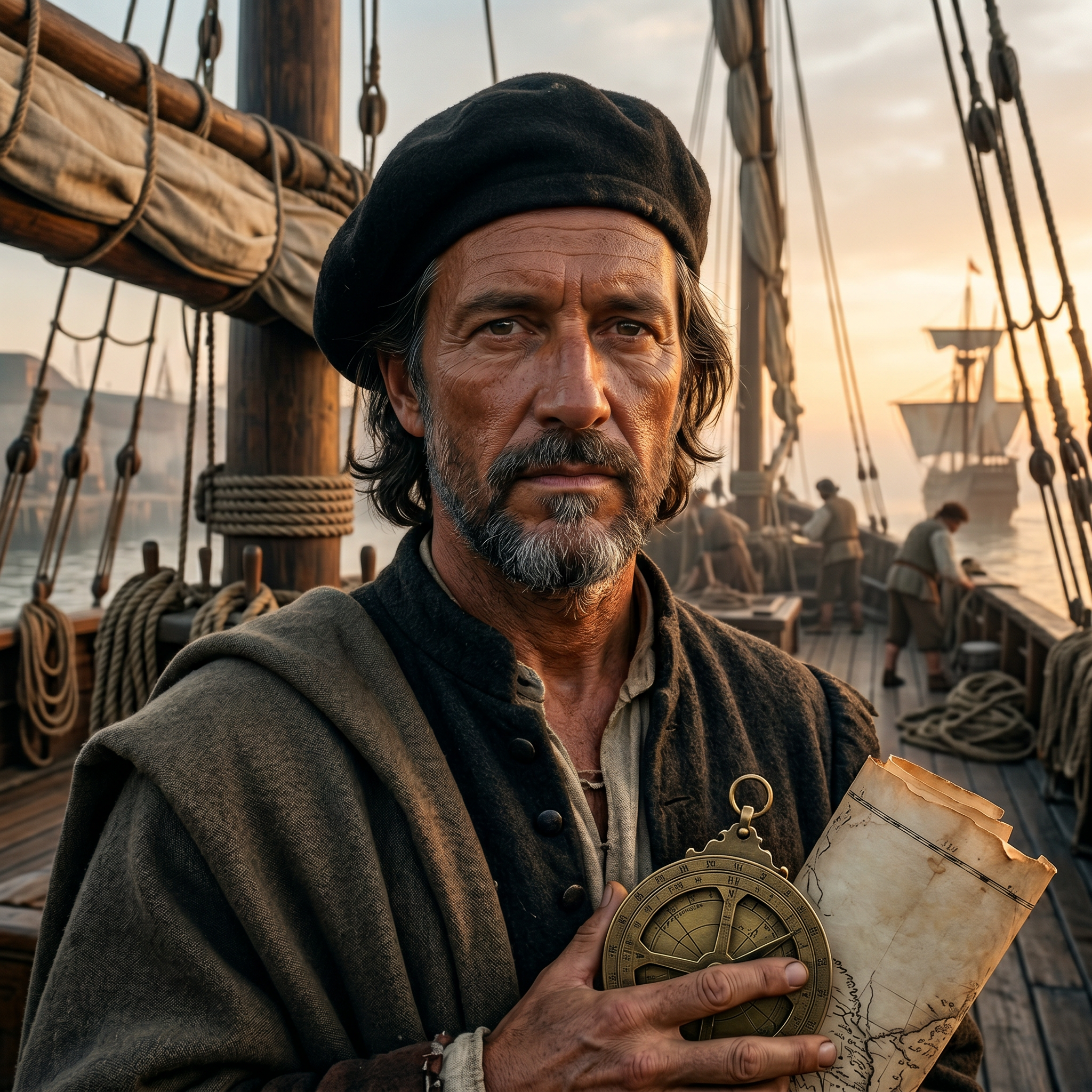
On the deck of the flagship, a man with a firm step and a defiant gaze watched the horizon. It was Alonso de Ojeda, a veteran of wars and expeditions, the same man who had ridden at Granada and held sway on Hispaniola. Beside him, with a more calculating expression and a notebook always to hand, stood the Florentine Amerigo Vespucci: merchant, observer, writer. The trio was completed by the wise and weathered Juan de la Cosa, cartographer of endless seas, who had already charted routes with Columbus himself.
That day they sailed not under the flag of any admiral, but of their own accord, defying Columbus's monopoly. They had royal permission, a hunger for discovery and the wind on their side.
After leaving the Canaries and Cape Verde behind, Ojeda ordered a turn to the south-west. The ocean seemed to stretch on forever. The heat was immense. The sailors' silence was as thick as fog. They did not know whether they would find land or only legends.
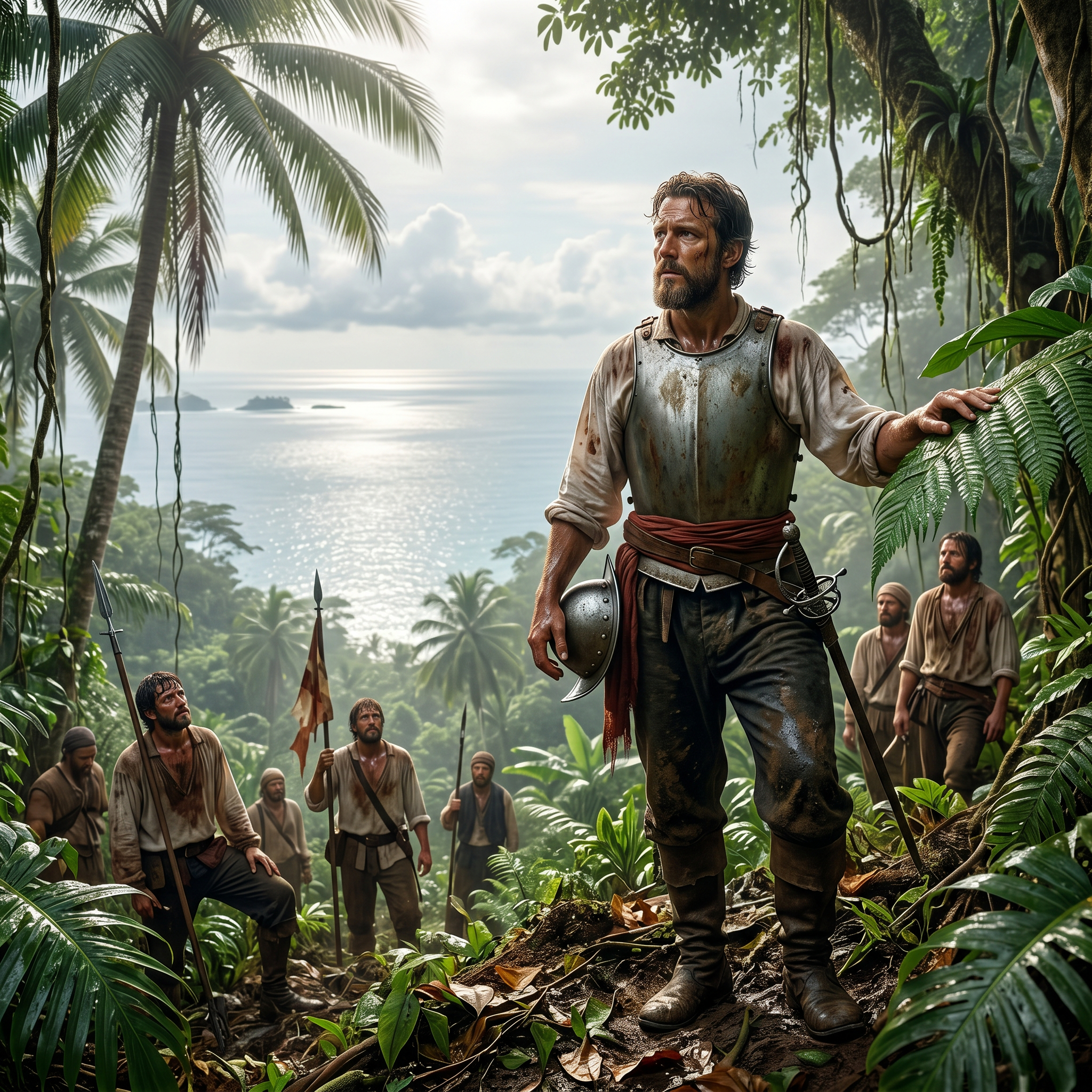
And then it appeared. First as a hazy green line, then as vibrant jungle: the coast of present-day Guiana. Shouts of joy, raised hands, prayers. They had reached the mainland.
A new continent
The crew ventured inland in canoes, crossing rivers where fresh water battled with the sea. There, at a point they later learned was the Orinoco, Vespucci drank the water and raised his eyebrows. "This is no island!" he murmured. "This is a continent."
He was the first European to suspect it with certainty. The New World had just been born.
They sailed west along the coast. The heat was oppressive, but the coast never ceased to amaze them. Impenetrable jungles, birds of impossible colours, indigenous peoples who watched them with a mixture of fear and pride. At every makeshift harbour, the chroniclers coined new words for what they could not name: fruits such as the mamey, animals such as the jaguar, rites that defied all European logic.
On 24 August they reached an enormous lagoon: Lake Maracaibo. From the deck, Vespucci pointed to some structures over the water: houses raised on long poles. Stilt houses. An entire village seemed to float. "Like Venice!" he exclaimed.
Ojeda smiled. "We will call it Venezuela."
"It was already the middle of the month of August when, rounding Cape San Román, the bold navigator entered a wide gulf with his fleet, where there was a town of huts on piles set along the shore. On seeing it, Juan de la Cosa said it looked like a little Venice without palaces or white stone, to which Ojeda replied: 'If it is like Venice, and a little Venice, by my faith I shall call it Venezuela.'"
Encounters, conflicts and discoveries
But not everything was wonder. On the Guajira Peninsula, the natives attacked with poisoned arrows. One struck Ojeda's shield, and he tore it out in fury. From then on, mistrust grew. They captured several natives, some to obtain information, others to trade on their return.
In one of those villages, according to Vespucci's account, they witnessed practices of ritual cannibalism. The story spread through Europe like wildfire. America became even more mysterious and feared.
The expedition reached Hispaniola in early September. There, Columbus's men received them with suspicion. Who were these intruders? What were they bringing? Why did their maps not go through the Admiral?
Juan de la Cosa's map
There was no time for disputes. Ojeda decided to return to Spain. And on arrival, Juan de la Cosa drew the first map of the known world to show the American continent clearly. A silent revolution in ink and parchment.

Meanwhile, Vespucci's letters circulated quickly. He wrote of new constellations, of overflowing rivers, of a world not described by Ptolemy. A different world, complete and real.
The legacy of Alonso de Ojeda
Alonso de Ojeda kept travelling. He founded Santa Cruz in 1502 and San Sebastián de Urabá in 1510. He survived shipwrecks, pirates and betrayals. He was wounded, imprisoned and freed. He founded, governed and fought. He never gave up.
He died poor in 1515, in a monastery in Santo Domingo. His last wish was to be buried beneath the doorway of the church, so that the feet of the faithful would tread on him as a sign of humility.
Beside him, Guaricha Isabel, his indigenous wife, wished to be buried with him. Theirs was the first legal marriage between a Spaniard and an American woman.
And although history has partly forgotten him, his legacy is immense. For it was he who, without knowing it, gave a country its name. A name born of adventure, of a navigator's astonished gaze: Venezuela.