Vicente Yáñez Pinzón: Navigator of the Amazon and Pioneer of Brazil
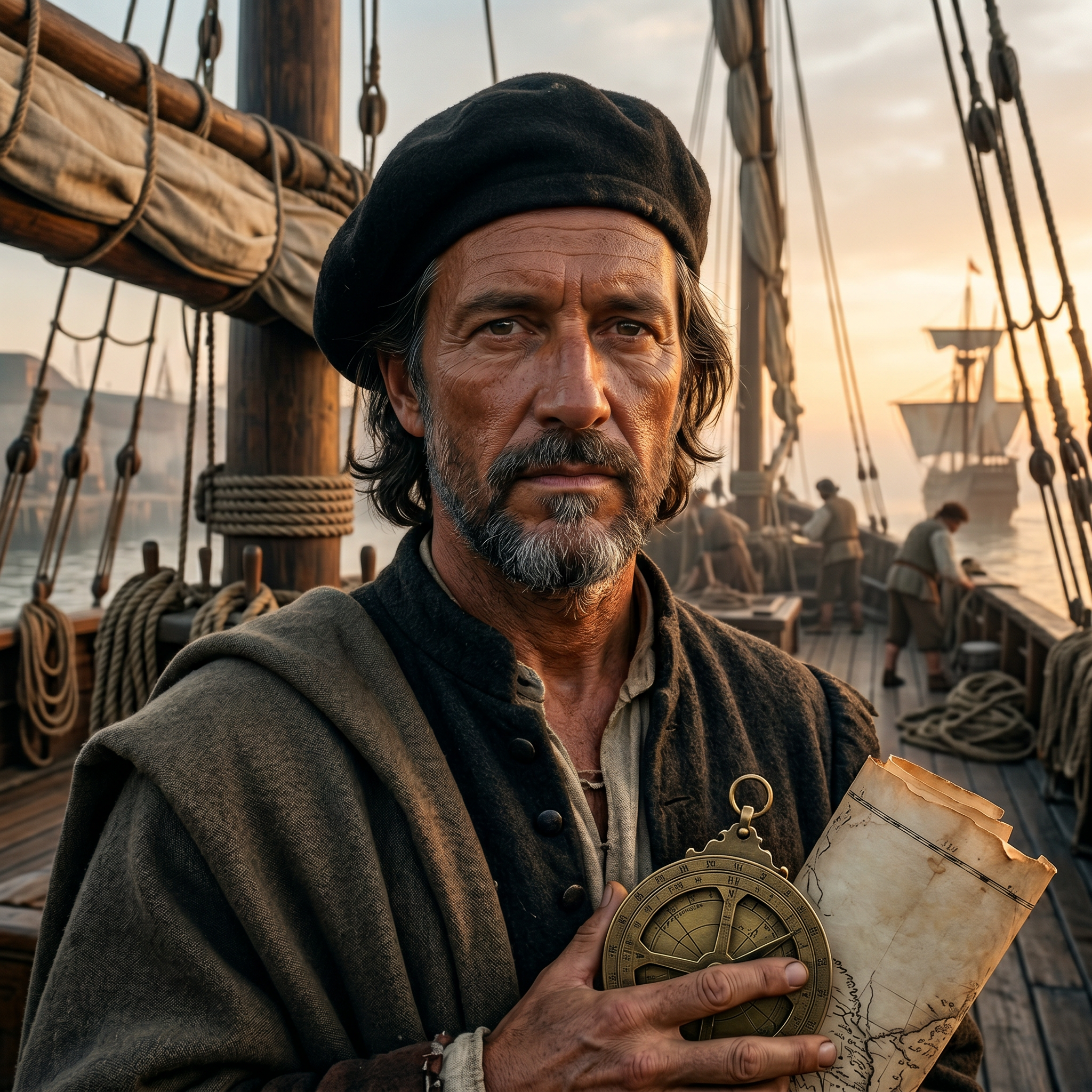
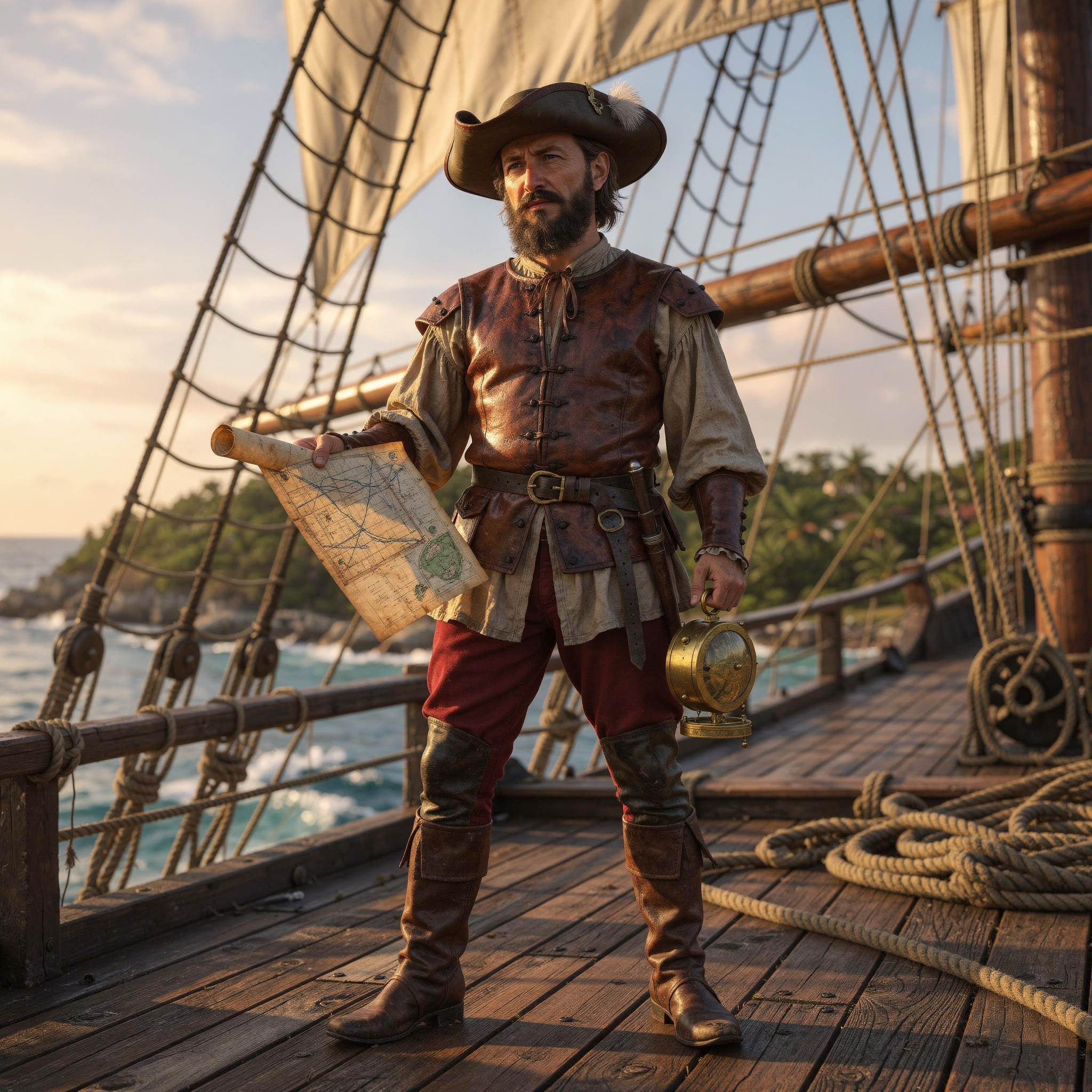
Born in Palos de la Frontera on an uncertain date in the fifteenth century, Vicente Yáñez Pinzón came from a powerful and experienced seafaring family, the Pinzóns, ship owners with oceanic ambitions. From a young age he sailed with his brother Martín Alonso, and when Christopher Columbus arrived at the Huelva port seeking support for his daring enterprise, the Pinzóns did not hesitate to join him.
So, in 1492, Vicente captained the caravel Niña on Columbus's first voyage. When the Santa María was wrecked on the coast of Hispaniola, the Niña became the flagship, and it was Vicente who, together with Columbus, returned to the Peninsula with news of the discovery, while his brother Martín, gravely ill, diverted to Galicia and died shortly afterwards.
As Columbus's name grew and the monopoly on voyages was concentrated in his person, Vicente remained in the shadows. But when that monopoly was revoked in 1499, he became one of the first to organise his own voyages of discovery, alongside names such as Ojeda, Niño, Guerra and Lepe.
The voyage of 1500: an unknown coast, an immense river
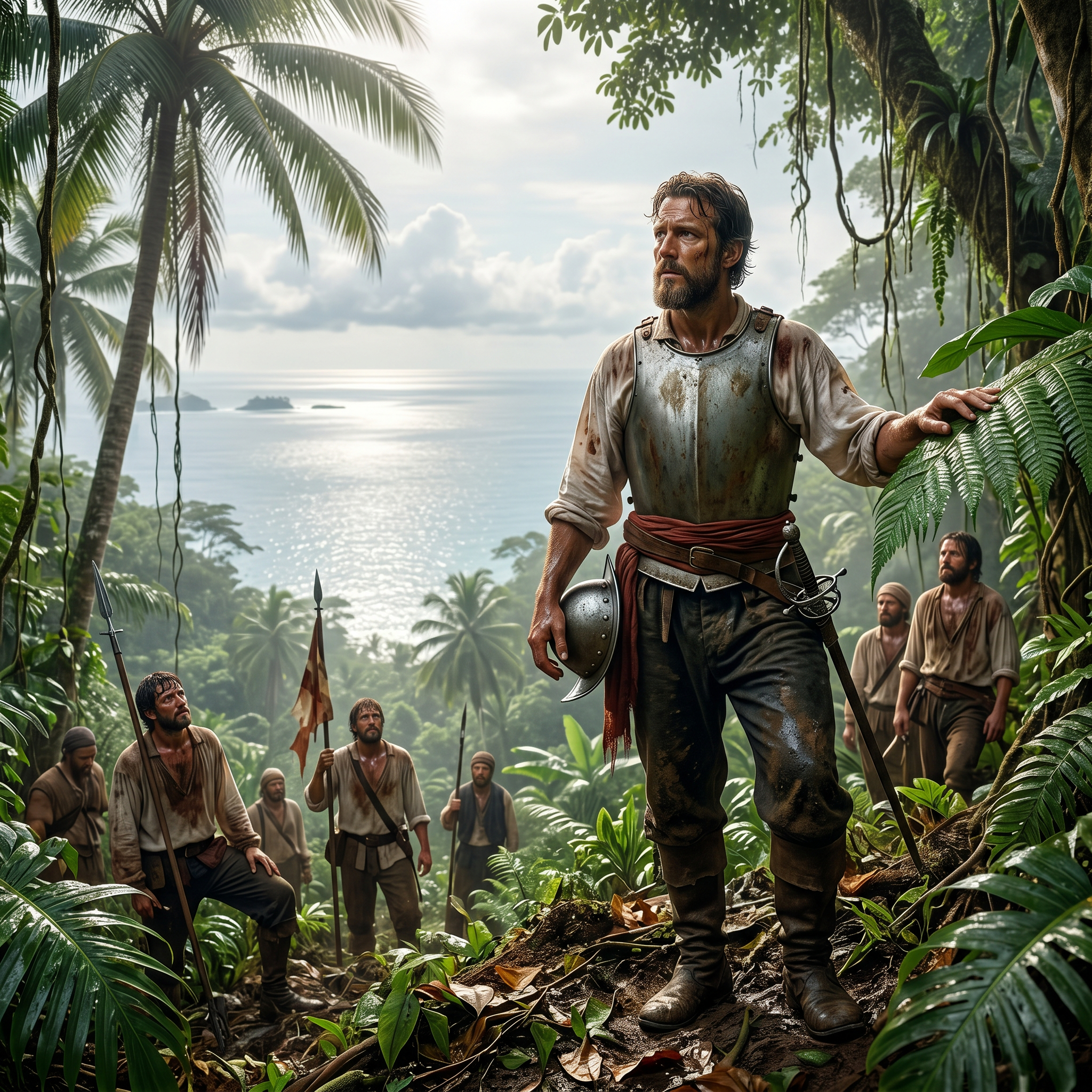
With the support of his nephew Arias Pérez Pinzón and other relatives, Vicente fitted out four caravels and sailed from Palos in early December 1499. His pilots were experts: Juan Quintero and Juan de Umbría, who had already sailed with Columbus. From Cape Verde they headed south-west, and on 20 or 26 January 1500 they sighted the mainland at 8° S: Cape Santo Agostinho, the easternmost point of Brazil.

He named it Cape Santa María de la Consolación and took possession in the name of the Catholic Monarchs, becoming the first European to reach the Brazilian coast, three months before Cabral. They sailed north-west along the coast and discovered a river so vast and powerful that it seemed an inland sea. It was the Marañón, later known as the Amazon. Some, such as Pompeu Sobrinho, believed it might be the Orinoco, but everything indicates that it was indeed the great Amazon.
For weeks they sailed along the coast of the present-day Guianas, covering some 300 leagues until they reached Paria, already explored by Columbus. From there they headed for Hispaniola, arriving on 23 June 1500, and then for the Lucayas (the Bahamas), where they lost two caravels. Despite the setbacks, Vicente returned to Spain on 30 September 1500, laden with dyewood, unknown animals, supposed spices and slaves.
He had travelled 600 leagues of coastline—more than 3,600 km—and confirmed that they were facing a new continent, not a chain of islands. But the economic result was poor: loss of life, shipwrecks and little tangible profit. Even so, the Catholic Monarchs recognised his merit and in 1501 granted him the governorship of the coast from Cape Consolación to the river of the Sweet Sea (the Amazon), although this area fell within the Portuguese hemisphere under the Treaty of Tordesillas, which prevented Pinzón from organising a new expedition there.
Last voyages and overlooked discoveries
In 1505 Vicente tried to colonise Puerto Rico and build a fortress there. Although he did not manage to settle, he surveyed the island and released livestock, laying the groundwork for future settlements. He was appointed governor and captain general, and took part in the subjugation of Hispaniola alongside Nicolás de Ovando.
In 1507 a historic meeting of the best seamen of the day was held in Burgos: Pinzón, Juan Díaz de Solís, Amerigo Vespucci and Juan de la Cosa. There a new expedition west of the Antilles was planned, in search of a passage to the Spice Islands. In 1508, together with Solís, Vicente sailed the coasts of Honduras, discovered the Bay of La Natividad, the Río Dulce and possibly the eastern coast of Yucatán.
They returned in 1509, but disputes with Solís overshadowed the discoveries. Although he had reached Yucatán before Hernández de Córdoba, his finding was forgotten and attributed to others years later.
The final silence
After 1510, Vicente Yáñez Pinzón gradually disappears from the chronicles. He is recorded as having testified in the Columbian Lawsuits, and his last documented appearance dates from 1514. He is believed to have died in 1515, perhaps in Triana, perhaps at sea, like so many of his family. His figure, however, has passed into history as one of the great navigators of the Spanish Renaissance: the forgotten discoverer of the Amazon, the pioneer of Brazil, the silent captain of the Niña.